
Published: May 29, 2026
By: By Tanni Haas, Ph.D.
From reducing plastic and choosing reef-safe sunscreen to beach cleanups and kid-friendly ocean books, these simple, family-friendly ideas help children learn why protecting the ocean matters — and how to take action.
June 8 is World Oceans Day, a great occasion to teach kids why protecting the world’s oceans is so important and what they can do to support that effort. Here are 14 suggestions to get started:
1. Go outside and start cleaning up all the trash from the sidewalk and the street in front of your home. Explain to the kids that the trash would otherwise go into the storm drain and eventually make its way into the ocean.
2. A major ocean pollutant is plastic. Gather the kids and have them count how many plastic items you currently use, but could easily do without. Common household items include plastic bags, cups, cutlery, straws and water bottles.
3. Have the kids examine your pots and pans to see which have labels that say they’re non-stick or stain-resistant. Very often, non-stick products contain PFAS: human-made chemical compounds that break down slowly and pollute the oceans.
When you’re done, head to the nearest supermarket and hardware store to search for sustainable substitutes for the plastic items you discarded. Look for items like paper straws, reusable shopping bags and water bottles, stainless steel pots and pans, etc.
4. The seafood industry can harm the world’s oceans. That industry contributes to pollution and threatens endangered species, such as sea turtles, which often end up as unfortunate bycatch. If you and the kids enjoy seafood, look for sustainably farmed varieties.
5. If you spend time near or in the ocean in the summer, get some reef-safe sunscreen. That is, sunscreens that don’t contain octinoxate or oxybenzone, two UV-blocking chemicals that wash off in the ocean and are known to contribute to coral bleaching.
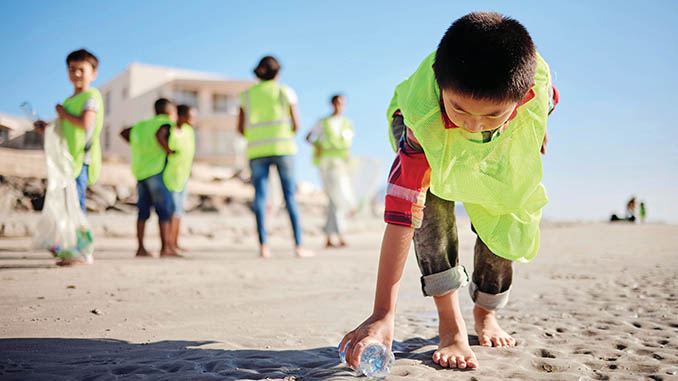
6. Start your own family beach clean-up. Get up early, head to the beach with reusable trash bags, and start picking up as much trash as you can. Once you’re done, treat yourselves to a clean beach and water for the rest of the day.
7. If you spend the day out on the water, whether boating, canoeing or kayaking, avoid throwing any trash overboard. Have the kids collect and dispose of any trash once you get back on land.
8. Teach the kids about household items people commonly flush down the toilet that often end up as ocean pollutants. This includes items such as cotton swabs, dental floss and wet wipes. Talk about alternative ways to dispose of those items or how to avoid them entirely, if possible.
9. Watch one or more of the many entertaining and informative documentaries about ocean conservation. Some, available on major streaming services, include A Plastic Ocean, Chasing Coral and Mission Blue.
10. Read some books about the ocean together. Some suggestions include, Children’s Encyclopedia of Ocean Life, Little Kids’ First Book of the Oceans, and The Fascinating Ocean Book For Kids.
11. Next time you order food in or go out for dinner, have the kids research local restaurants that are committed to sustainable practices, which help protect the world’s oceans. This could be anything from conserving water and reducing food waste to using eco-friendly packaging and utensils.
12. Encourage the kids to donate a percentage of their allowance to one or more of the larger national ocean conservation organizations, such as the Coral Reef Alliance, the Great Barrier Reef Foundation and the Ocean Conservancy.
13. If your kids are old enough to understand the concept of lobbying, go online together and find the contact information for local, state and federal officials who work on ocean-related issues. Write emails that urge them to help protect the oceans.
14. Go online and search for local organizations that work on ocean preservation that you and the kids can join as volunteers. The kids could also raise money for those organizations by starting a lemonade stand, organizing an online fundraiser or similar efforts.
Tanni Haas, Ph.D. is a Professor in the Department of Communication Arts, Sciences, and Disorders at the City University of New York – Brooklyn College.